

Relocating to a new home is already a stressful experience, but falling victim to fraudulent or fake packers and movers can turn it into an absolute nightmare. In India’s rapidly growing logistics and relocation industry, hundreds of unlicensed, fly-by-night operators prey on unsuspecting customers every single day. From suddenly holding your household belongings hostage for extortionate ransom fees to stealing valuable electronics and delivering severely damaged goods, moving fraud is a serious threat.
Fortunately, fraudulent movers almost always leave clear warning signs if you know what to look for. In this comprehensive guide, we’ll expose the most common moving scams in India and give you a foolproof checklist on how to avoid fake packers and movers.
1. The Most Common Moving Scams in India
The Low-Ball Estimate Scam (Price Baiting)
This is the single most common scam in the Indian relocation market. A fraudulent mover will quote you an unrealistically low price—sometimes 40% to 50% cheaper than established companies—to get you to hire them. However, on moving day, once all your belongings are loaded onto the truck, they will demand two to three times the agreed amount under the guise of “hidden taxes,” “toll charges,” “packing material costs,” or “stair carry fees.” If you refuse to pay, they will threaten to dump your goods or refuse delivery.
Holding Goods Hostage for Ransom
In this alarming scheme, the movers load your belongings, drive away, and then completely vanish for days. When they finally answer your calls, they demand an exorbitant additional payment in cash or direct bank transfer before disclosing the location of your truck or delivering your items.
Fake Company Names & Impersonation
Scammers frequently register domain names and print fake business cards that closely mimic trusted, reputable brands. They might alter a single letter in the company name, use identical color schemes, or falsely claim to be an authorized franchise or subsidiary of a well-known logistics firm.
The Disappearing Delivery
In extreme cases, fake movers aren’t moving companies at all—they are organized thieves. After taking an upfront cash deposit and loading your valuable electronics, jewelry, and furniture, the truck drives off and disappears permanently, leaving the victim with empty rooms and untraceable phone numbers.
2. Major Red Flags of Fake Moving Companies
- No Physical Office or Valid GST Number: If a company cannot provide a physical office address with a verified Google Maps location and a legitimate GST registration certificate, do not hire them.
- Quotes Given Strictly Over the Phone or WhatsApp: Reputable moving companies always insist on either an in-person physical survey or a detailed virtual video survey before providing a binding quotation. Anyone giving instant flat rates over a single WhatsApp message is cutting corners.
- Generic Names and Free Email Addresses: Watch out for movers operating via generic Gmail or Yahoo email addresses, having no official website, or using names like “Best Movers” or “Quick Shifters” without legal entity backing.
- Demanding Cash-Only or Personal UPI Payments: Genuine logistics companies have official business bank accounts and provide stamped GST invoices. Demand for cash-only or transfers to individual personal UPI IDs is a massive warning sign.
- Vague or Missing Insurance Policies: Fake movers will verbally assure you that “everything is 100% insured,” but will never provide an official transit insurance policy certificate from an accredited insurance underwriter.
3. Step-by-Step Verification Checklist Before Hiring
Step 1: Verify the GSTIN and Company Registration
Ask for the mover’s 15-digit GST identification number (GSTIN). You can easily verify its validity on the official government GST portal (services.gst.gov.in). Check whether the legal business name and registered address match what is printed on their quotation.
Step 2: Inspect Their Physical Office
If feasible, visit their local branch or office in person. Check if they have a physical setup, branded trucks, and professional staff. Scammers operate strictly from mobile numbers and untraceable WhatsApp profiles.
Step 3: Demand a Detailed, Itemized Quotation
Never accept a verbal quote or a handwritten note. Ensure every expense—packing materials, loading, transit, toll charges, unloading, and unpacking—is explicitly documented in a formal written contract. The contract should clearly state that no additional charges will be levied without prior written consent.
Step 4: Insist on Transit Insurance Documentation
Always opt for comprehensive transit insurance, especially for long-distance or inter-city moves. Ensure you receive an official policy document with the policy number, premium receipt, and the underwriter’s name before the move begins.
Step 5: Check Authentic Reviews Across Multiple Platforms
Do not rely solely on testimonials published on the mover’s own website. Search for independent reviews on Google Business Profiles, Trustpilot, and social media. Look for detailed reviews describing both positive experiences and how disputes were handled.
At House Shifters, transparency, security, and verified professionalism are our highest priorities. All our moving partners are thoroughly vetted, licensed, and backed by comprehensive transit insurance to guarantee complete peace of mind. Whether you require local shifting, inter-city relocation, or specialized car transport and bike transport, you can trust our verified network. Get a transparent, no-obligation estimate today using our moving cost calculator.
Frequently Asked Questions (FAQs)
How do I verify if a moving company is legally registered?
You can verify a moving company by checking their 15-digit GSTIN on the official government GST portal, verifying their Ministry of Corporate Affairs (MCA) registration if they are a private limited company, and checking their physical office address on Google Maps.
What should I do if a moving company holds my goods hostage?
Immediately file a formal police complaint (FIR) at your nearest police station for criminal breach of trust (Section 406 IPC) and cheating (Section 420 IPC). You can also lodge an urgent grievance with the National Consumer Helpline (NCH) at consumerhelpline.gov.in or call 1915.
Is verbal transit insurance valid during house shifting?
No. Verbal promises of insurance are completely invalid and legally unenforceable. Always insist on an official insurance policy certificate issued by a recognized general insurance provider with your consignment details and declared value clearly stated.
Can movers ask for extra money after loading the truck?
Legitimate movers will never demand additional money after loading unless you have added significant unlisted items or requested extra services not mentioned in the original agreed contract. Always insist on an ‘all-inclusive’ written quotation before work commences.
What documents should I receive before the truck departs?
Before the truck departs, you should receive a stamped copy of the Consignment Note (Bilty / LR copy), a detailed household inventory list signed by both you and the supervisor, a payment receipt for any advance paid, and the transit insurance certificate.
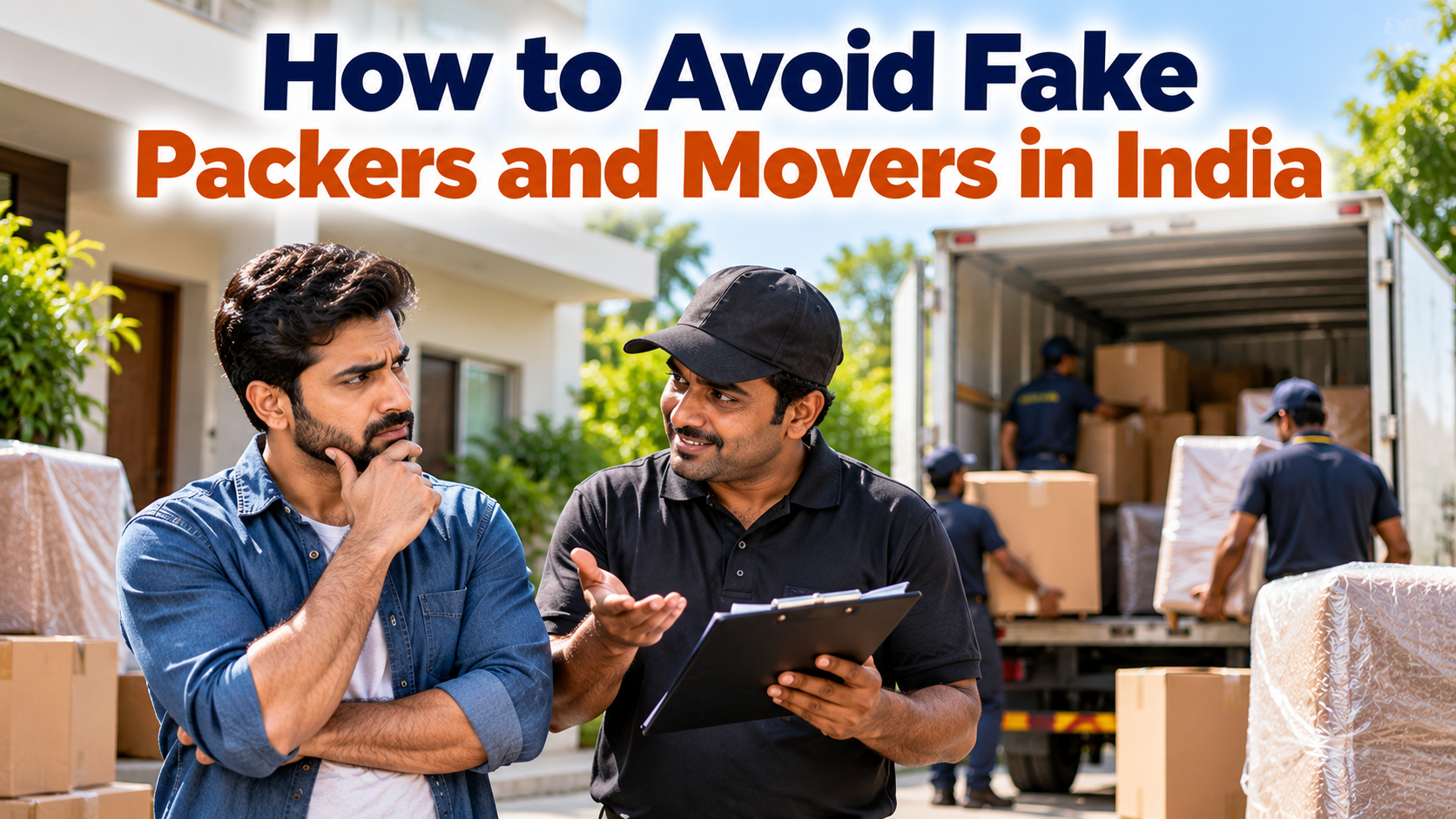
Relocating to a new home is already a stressful experience, but falling victim to fraudulent or fake packers and movers can turn it into an absolute nightmare. In India’s rapidly growing logistics and relocation industry, hundreds of unlicensed, fly-by-night operators prey on unsuspecting customers every single day. From suddenly holding your household belongings hostage for extortionate ransom fees to stealing valuable electronics and delivering severely damaged goods, moving fraud is a serious threat.
Fortunately, fraudulent movers almost always leave clear warning signs if you know what to look for. In this comprehensive guide, we’ll expose the most common moving scams in India and give you a foolproof checklist on how to avoid fake packers and movers.
1. The Most Common Moving Scams in India
The Low-Ball Estimate Scam (Price Baiting)
This is the single most common scam in the Indian relocation market. A fraudulent mover will quote you an unrealistically low price—sometimes 40% to 50% cheaper than established companies—to get you to hire them. However, on moving day, once all your belongings are loaded onto the truck, they will demand two to three times the agreed amount under the guise of “hidden taxes,” “toll charges,” “packing material costs,” or “stair carry fees.” If you refuse to pay, they will threaten to dump your goods or refuse delivery.
Holding Goods Hostage for Ransom
In this alarming scheme, the movers load your belongings, drive away, and then completely vanish for days. When they finally answer your calls, they demand an exorbitant additional payment in cash or direct bank transfer before disclosing the location of your truck or delivering your items.
Fake Company Names & Impersonation
Scammers frequently register domain names and print fake business cards that closely mimic trusted, reputable brands. They might alter a single letter in the company name, use identical color schemes, or falsely claim to be an authorized franchise or subsidiary of a well-known logistics firm.
The Disappearing Delivery
In extreme cases, fake movers aren’t moving companies at all—they are organized thieves. After taking an upfront cash deposit and loading your valuable electronics, jewelry, and furniture, the truck drives off and disappears permanently, leaving the victim with empty rooms and untraceable phone numbers.
2. Major Red Flags of Fake Moving Companies
- No Physical Office or Valid GST Number: If a company cannot provide a physical office address with a verified Google Maps location and a legitimate GST registration certificate, do not hire them.
- Quotes Given Strictly Over the Phone or WhatsApp: Reputable moving companies always insist on either an in-person physical survey or a detailed virtual video survey before providing a binding quotation. Anyone giving instant flat rates over a single WhatsApp message is cutting corners.
- Generic Names and Free Email Addresses: Watch out for movers operating via generic Gmail or Yahoo email addresses, having no official website, or using names like “Best Movers” or “Quick Shifters” without legal entity backing.
- Demanding Cash-Only or Personal UPI Payments: Genuine logistics companies have official business bank accounts and provide stamped GST invoices. Demand for cash-only or transfers to individual personal UPI IDs is a massive warning sign.
- Vague or Missing Insurance Policies: Fake movers will verbally assure you that “everything is 100% insured,” but will never provide an official transit insurance policy certificate from an accredited insurance underwriter.
3. Step-by-Step Verification Checklist Before Hiring
Step 1: Verify the GSTIN and Company Registration
Ask for the mover’s 15-digit GST identification number (GSTIN). You can easily verify its validity on the official government GST portal (services.gst.gov.in). Check whether the legal business name and registered address match what is printed on their quotation.
Step 2: Inspect Their Physical Office
If feasible, visit their local branch or office in person. Check if they have a physical setup, branded trucks, and professional staff. Scammers operate strictly from mobile numbers and untraceable WhatsApp profiles.
Step 3: Demand a Detailed, Itemized Quotation
Never accept a verbal quote or a handwritten note. Ensure every expense—packing materials, loading, transit, toll charges, unloading, and unpacking—is explicitly documented in a formal written contract. The contract should clearly state that no additional charges will be levied without prior written consent.
Step 4: Insist on Transit Insurance Documentation
Always opt for comprehensive transit insurance, especially for long-distance or inter-city moves. Ensure you receive an official policy document with the policy number, premium receipt, and the underwriter’s name before the move begins.
Step 5: Check Authentic Reviews Across Multiple Platforms
Do not rely solely on testimonials published on the mover’s own website. Search for independent reviews on Google Business Profiles, Trustpilot, and social media. Look for detailed reviews describing both positive experiences and how disputes were handled.
At House Shifters, transparency, security, and verified professionalism are our highest priorities. All our moving partners are thoroughly vetted, licensed, and backed by comprehensive transit insurance to guarantee complete peace of mind. Whether you require local shifting, inter-city relocation, or specialized car transport and bike transport, you can trust our verified network. Get a transparent, no-obligation estimate today using our moving cost calculator.
Frequently Asked Questions (FAQs)
How do I verify if a moving company is legally registered?
You can verify a moving company by checking their 15-digit GSTIN on the official government GST portal, verifying their Ministry of Corporate Affairs (MCA) registration if they are a private limited company, and checking their physical office address on Google Maps.
What should I do if a moving company holds my goods hostage?
Immediately file a formal police complaint (FIR) at your nearest police station for criminal breach of trust (Section 406 IPC) and cheating (Section 420 IPC). You can also lodge an urgent grievance with the National Consumer Helpline (NCH) at consumerhelpline.gov.in or call 1915.
Is verbal transit insurance valid during house shifting?
No. Verbal promises of insurance are completely invalid and legally unenforceable. Always insist on an official insurance policy certificate issued by a recognized general insurance provider with your consignment details and declared value clearly stated.
Can movers ask for extra money after loading the truck?
Legitimate movers will never demand additional money after loading unless you have added significant unlisted items or requested extra services not mentioned in the original agreed contract. Always insist on an ‘all-inclusive’ written quotation before work commences.
What documents should I receive before the truck departs?
Before the truck departs, you should receive a stamped copy of the Consignment Note (Bilty / LR copy), a detailed household inventory list signed by both you and the supervisor, a payment receipt for any advance paid, and the transit insurance certificate.
 Chat with us on WhatsApp!



 Your information is secured by


 House
 Office
 Car
 Bike


 Thank You!
