
How to Pack Fragile Items for Moving
One of the most stressful parts of moving to a new home is worrying about your fragile items. Hearing the dreadful sound of shattering glass from inside a moving box is every homeowner’s nightmare. Whether it’s your grandmother’s antique vase, expensive wine glasses, or delicate electronic screens, fragile items require special attention, the right materials, and strategic packing techniques.
In this ultimate guide, we’ll share expert tips on how to pack fragile items for moving so they arrive at your new destination in perfect condition.
1. Gather the Right Packing Supplies
When it comes to fragile items, you cannot cut corners on packing materials. Using old newspapers and flimsy grocery boxes won’t provide the protection your valuables need. Make sure you have the following supplies on hand:
- High-Quality Bubble Wrap: The most crucial material for protecting delicate surfaces.
- Packing Paper: Acid-free packing paper is essential. Avoid newspaper, as the ink can easily transfer and stain your dishes and glassware.
- Sturdy, Double-Corrugated Boxes: Use heavy-duty boxes designed for moving. Dish barrel boxes are highly recommended for kitchenware.
- Packing Peanuts or Foam: For filling empty gaps inside the boxes.
- High-Quality Packing Tape: Don’t rely on masking tape or duct tape.
2. Prepare the Box Properly
Never place a fragile item directly on the bottom of an empty box. Always create a soft, shock-absorbing base. Line the bottom of the box with a thick layer of crumpled packing paper, bubble wrap, or packing peanuts. This acts as a cushion to absorb any sudden impacts or drops during transit.
3. Packing Plates and Dishes
Plates are surprisingly fragile when packed incorrectly. The biggest mistake people make is packing plates flat, like a stack of pancakes.
- Wrap each plate individually in packing paper or bubble wrap.
- Pack them vertically: Place the wrapped plates inside the box on their edges, like records in a crate. They can sustain much more pressure this way.
- Fill the spaces between the plates with crumpled paper to prevent them from shifting.
4. Packing Glasses and Mugs
Glasses are extremely delicate, especially around the rims.
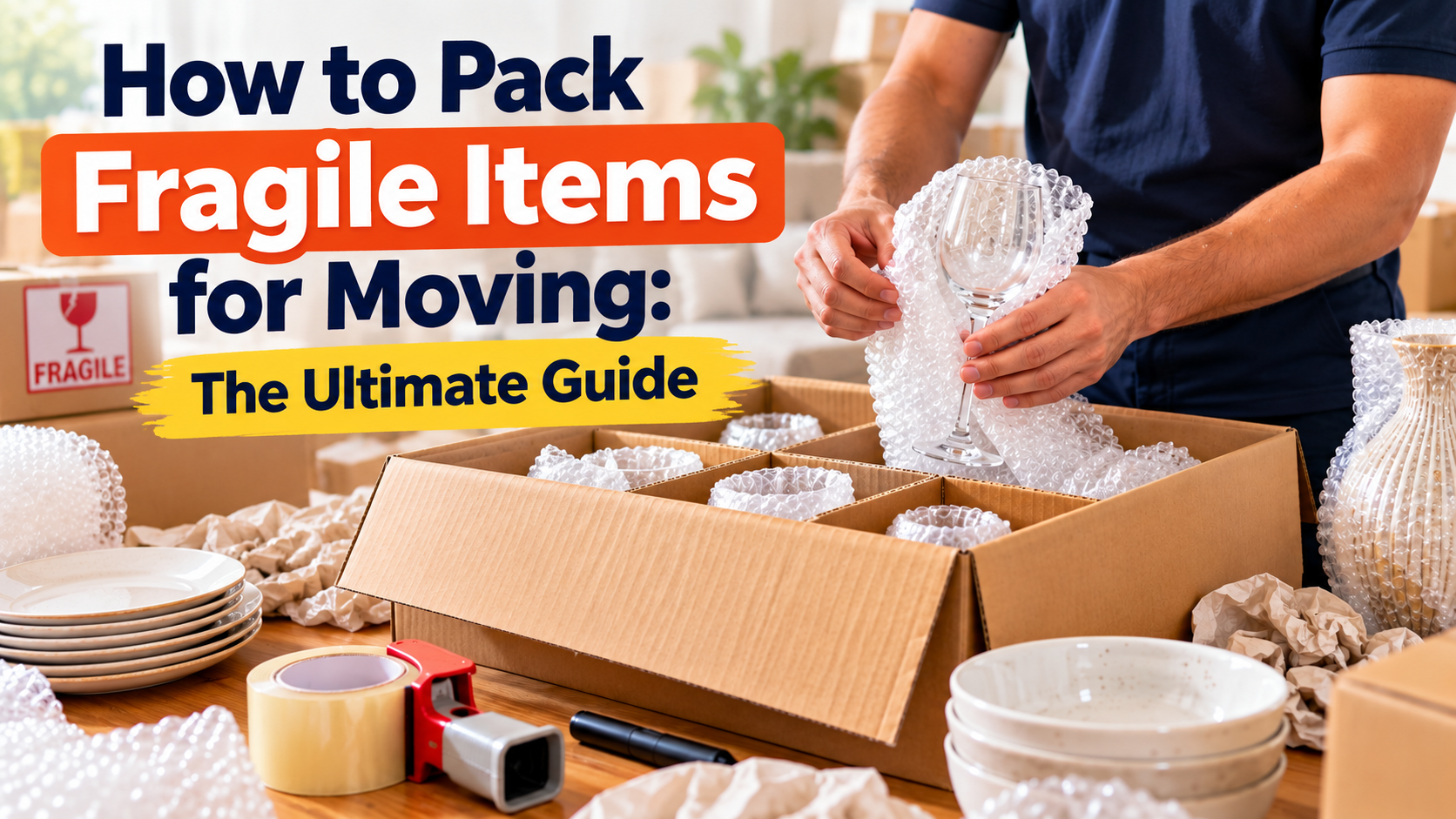
- Stuff the inside of the glass with crumpled packing paper to support the structure.
- Roll the glass in a sheet of packing paper, tucking the ends inside, and then wrap the entire piece in bubble wrap.
- Place glasses upright in the box. Place the heaviest and sturdiest mugs at the bottom, and the most delicate wine glasses at the top.
5. Packing Artwork and Mirrors
Large pieces of glass and canvas require specialized care.
- Use painter’s tape to place an “X” across the glass of the mirror or picture frame. If the glass does break, the tape will hold the shards in place and prevent them from scratching the artwork.
- Wrap the item completely in thick bubble wrap or a moving blanket.
- Use a specialized telescopic picture box (or mirror box) to slide the artwork into.
6. Don’t Overpack the Boxes
It can be tempting to cram as many items as possible into a single box to save space, but this is disastrous for fragile items. If a box is too heavy, the items at the bottom will be crushed under the weight of the items on top. Furthermore, a heavy box is more likely to be dropped by the movers. Keep boxes containing fragile items light and easy to handle.
7. Fill the Empty Spaces
Once your fragile items are in the box, there should be absolutely no empty space left. Any void allows the items to shift, bump into each other, and break. Fill every nook and cranny to the brim with packing peanuts, crumpled paper, or old towels. Before taping the box shut, gently shake it. If you hear or feel anything moving inside, you need to add more padding.
8. Label Everything Clearly
Once the box is securely taped, grab a thick red marker and label the box heavily. Write “FRAGILE” and “THIS SIDE UP” on all four sides and the top of the box. This clearly communicates to your residential moving team that the box requires delicate handling.
Packing fragile items requires time, patience, and precision. If you are running short on time or prefer to leave it to the experts, consider utilizing professional packing services. Our team at House Shifters specializes in safe, secure packing to ensure your valuables reach your new home flawlessly. Contact us today or use our moving cost calculator to estimate your move!
Frequently Asked Questions (FAQs)
Can I use clothes and towels instead of bubble wrap?
Yes, utilizing clean towels, thick sweaters, and blankets is an excellent and eco-friendly way to pad your fragile items. Just ensure they are tightly packed so items don’t shift during the move.
Should I remove the lightbulbs from my lamps before packing?
Absolutely. Always remove lightbulbs and lampshades from lamps. Pack the bulbs separately in small, well-padded boxes, and nest the lampshades together in a separate box to prevent them from getting crushed.
How do I pack a flat-screen TV?
The safest way to move a flat-screen TV is in its original box with the original styrofoam inserts. If you don’t have it, wrap the TV in anti-static bubble wrap and a thick moving blanket, and place it in a specialized, heavy-duty TV moving box.
Is newspaper safe for packing dishes?
No, it is not recommended to use newspaper directly against your dishes or glassware. The ink from the newspaper can easily bleed and stain your items permanently. Always use plain, acid-free packing paper for the initial layer.
How to Pack Fragile Items for Moving
One of the most stressful parts of moving to a new home is worrying about your fragile items. Hearing the dreadful sound of shattering glass from inside a moving box is every homeowner’s nightmare. Whether it’s your grandmother’s antique vase, expensive wine glasses, or delicate electronic screens, fragile items require special attention, the right materials, and strategic packing techniques.
In this ultimate guide, we’ll share expert tips on how to pack fragile items for moving so they arrive at your new destination in perfect condition.
1. Gather the Right Packing Supplies
When it comes to fragile items, you cannot cut corners on packing materials. Using old newspapers and flimsy grocery boxes won’t provide the protection your valuables need. Make sure you have the following supplies on hand:
- High-Quality Bubble Wrap: The most crucial material for protecting delicate surfaces.
- Packing Paper: Acid-free packing paper is essential. Avoid newspaper, as the ink can easily transfer and stain your dishes and glassware.
- Sturdy, Double-Corrugated Boxes: Use heavy-duty boxes designed for moving. Dish barrel boxes are highly recommended for kitchenware.
- Packing Peanuts or Foam: For filling empty gaps inside the boxes.
- High-Quality Packing Tape: Don’t rely on masking tape or duct tape.
2. Prepare the Box Properly
Never place a fragile item directly on the bottom of an empty box. Always create a soft, shock-absorbing base. Line the bottom of the box with a thick layer of crumpled packing paper, bubble wrap, or packing peanuts. This acts as a cushion to absorb any sudden impacts or drops during transit.
3. Packing Plates and Dishes
Plates are surprisingly fragile when packed incorrectly. The biggest mistake people make is packing plates flat, like a stack of pancakes.
- Wrap each plate individually in packing paper or bubble wrap.
- Pack them vertically: Place the wrapped plates inside the box on their edges, like records in a crate. They can sustain much more pressure this way.
- Fill the spaces between the plates with crumpled paper to prevent them from shifting.
4. Packing Glasses and Mugs
Glasses are extremely delicate, especially around the rims.
- Stuff the inside of the glass with crumpled packing paper to support the structure.
- Roll the glass in a sheet of packing paper, tucking the ends inside, and then wrap the entire piece in bubble wrap.
- Place glasses upright in the box. Place the heaviest and sturdiest mugs at the bottom, and the most delicate wine glasses at the top.
5. Packing Artwork and Mirrors
Large pieces of glass and canvas require specialized care.
- Use painter’s tape to place an “X” across the glass of the mirror or picture frame. If the glass does break, the tape will hold the shards in place and prevent them from scratching the artwork.
- Wrap the item completely in thick bubble wrap or a moving blanket.
- Use a specialized telescopic picture box (or mirror box) to slide the artwork into.
6. Don’t Overpack the Boxes
It can be tempting to cram as many items as possible into a single box to save space, but this is disastrous for fragile items. If a box is too heavy, the items at the bottom will be crushed under the weight of the items on top. Furthermore, a heavy box is more likely to be dropped by the movers. Keep boxes containing fragile items light and easy to handle.
7. Fill the Empty Spaces
Once your fragile items are in the box, there should be absolutely no empty space left. Any void allows the items to shift, bump into each other, and break. Fill every nook and cranny to the brim with packing peanuts, crumpled paper, or old towels. Before taping the box shut, gently shake it. If you hear or feel anything moving inside, you need to add more padding.
8. Label Everything Clearly
Once the box is securely taped, grab a thick red marker and label the box heavily. Write “FRAGILE” and “THIS SIDE UP” on all four sides and the top of the box. This clearly communicates to your residential moving team that the box requires delicate handling.
Packing fragile items requires time, patience, and precision. If you are running short on time or prefer to leave it to the experts, consider utilizing professional packing services. Our team at House Shifters specializes in safe, secure packing to ensure your valuables reach your new home flawlessly. Contact us today or use our moving cost calculator to estimate your move!
Frequently Asked Questions (FAQs)
Can I use clothes and towels instead of bubble wrap?
Yes, utilizing clean towels, thick sweaters, and blankets is an excellent and eco-friendly way to pad your fragile items. Just ensure they are tightly packed so items don’t shift during the move.
Should I remove the lightbulbs from my lamps before packing?
Absolutely. Always remove lightbulbs and lampshades from lamps. Pack the bulbs separately in small, well-padded boxes, and nest the lampshades together in a separate box to prevent them from getting crushed.
How do I pack a flat-screen TV?
The safest way to move a flat-screen TV is in its original box with the original styrofoam inserts. If you don’t have it, wrap the TV in anti-static bubble wrap and a thick moving blanket, and place it in a specialized, heavy-duty TV moving box.
Is newspaper safe for packing dishes?
No, it is not recommended to use newspaper directly against your dishes or glassware. The ink from the newspaper can easily bleed and stain your items permanently. Always use plain, acid-free packing paper for the initial layer.
 Chat with us on WhatsApp!



 Your information is secured by


 House
 Office
 Car
 Bike


 Thank You!
