

How to Prepare Electrical Appliances for House Moving
Relocating to a new home is an exciting milestone, but the process of packing and moving your belongings can be daunting. Among the most challenging items to move are electrical appliances. From refrigerators and washing machines to televisions and microwaves, these items are not only heavy and bulky but also fragile and sensitive to movement. Proper preparation is key to ensuring they arrive at your new home safely and function correctly once plugged back in.
In this comprehensive guide, we’ll walk you through the essential steps to prepare your electrical appliances for house moving. By following these practical tips, you can protect your valuable electronics and enjoy a smooth, stress-free relocation.
1. Read the Manufacturer’s Manual
Before you start unplugging and moving any appliance, it’s crucial to consult the manufacturer’s manual. The manual contains specific instructions for preparing, moving, and installing the appliance safely. If you’ve misplaced the physical copy, you can usually find a digital version on the manufacturer’s website by searching for your appliance’s model number.
2. Clean and Defrost Your Refrigerator
Your refrigerator requires special attention before moving day. Here’s a step-by-step process:
- Empty it out: Remove all food, condiments, and loose items from the fridge and freezer compartments. Consume or donate perishables leading up to the move.
- Unplug and defrost: Unplug the refrigerator at least 24 to 48 hours before the move. Leave the doors open to allow the freezer to defrost completely. Place towels around the base to soak up any melting water.
- Clean thoroughly: Wipe down all interior surfaces with a mixture of baking soda and water to remove odors and prevent mold growth during transit. Dry the interior completely.
- Secure loose parts: Remove all shelves, drawers, and removable components. Wash and dry them separately, then pack them securely in a padded box. If you prefer to leave them inside, tape them securely in place to prevent shifting.
- Secure the doors: Use strong tape or bungee cords to keep the doors shut during transport.
3. Prepare Your Washing Machine
Washing machines are heavy and contain water, making them tricky to move. Follow these steps:
- Clean and dry: Run a cleaning cycle with hot water and a washing machine cleaner or white vinegar to remove any residue. Once finished, leave the door open for 24 hours to let the interior dry completely.
- Disconnect water supply: Turn off the water supply valves. Disconnect the hot and cold water hoses, drain any remaining water into a bucket, and pack the hoses in a labeled bag. Keep the bag inside the washing machine drum or tape it to the exterior.
- Secure the drum: This is a critical step! Consult your manual to find out how to secure the washing machine drum. You’ll likely need to use the transit bolts (shipping bolts) that came with the machine to prevent the suspension system from getting damaged during the move.
4. Pack Your Television Safely
Modern flat-screen televisions are delicate and easily damaged. The best way to move a TV is in its original box with the original styrofoam packing materials. If you don’t have the original box, follow these steps:
- Unplug and organize cables: Unplug the TV and all connected devices. Coil the cables neatly and secure them with zip ties or twist ties. Label the cables so you know where they go when setting up in your new home.
- Remove the stand or wall mount: Detach the TV from its stand or wall mount. Keep all screws and hardware in a labeled ziplock bag and tape it securely to the back of the TV.
- Protect the screen: Cover the screen with a soft blanket or foam wrap. Avoid placing any pressure on the screen itself.
- Use a specialized TV box: Purchase a specialized, heavy-duty TV moving box from a packing supply store. These boxes often come with foam corners to protect the edges of your TV. Carefully slide the TV into the box, ensuring it fits snugly without shifting.
- Keep it upright: Always transport the TV in an upright position. Never lay it flat on its screen or back.
5. Handle Air Conditioners with Care
Moving an air conditioner, whether a window unit or a split AC, requires careful handling.
- Window ACs: Unplug the unit, remove the filter, and clean it. Carefully remove the unit from the window, keeping it upright to prevent the compressor oil from shifting. Pack it in its original box or a sturdy, padded box.
- Split ACs: If you are moving a split AC, it’s highly recommended to hire professional technicians to uninstall it. They will safely trap the refrigerant gas in the outdoor unit before disconnecting the pipes. Moving it yourself can lead to gas leaks and permanent damage.
6. Prepare Smaller Appliances (Microwaves, Toasters, Blenders)
Smaller kitchen appliances are easier to pack but still need protection.
- Clean and dry: Clean all appliances thoroughly and ensure they are completely dry to prevent mold.
- Remove fragile parts: For microwaves, remove the glass turntable and pack it separately with plenty of bubble wrap. For blenders, pack the glass jar and base separately.
- Organize cords: Wrap the cords neatly and secure them. If possible, tape the cord to the back of the appliance to prevent it from dangling.
- Pack in sturdy boxes: Use strong boxes and line the bottom with crumpled packing paper. Place the heaviest appliances at the bottom and lighter ones on top. Fill any empty spaces with packing paper or bubble wrap so the appliances don’t move around.
General Tips for Moving Electrical Appliances
- Take photos before disconnecting: Before you unplug the maze of wires behind your TV or computer, take clear photos of the connections. This will save you a lot of time and frustration when setting everything up in your new home.
- Label everything: Label all boxes containing appliances clearly. Indicate “Fragile” and “This Side Up” to guide the movers. Keep all small parts, screws, and remotes in labeled ziplock bags and tape them to the corresponding appliance.
- Wait before plugging in: Once you arrive at your new home, do not plug in appliances like refrigerators and ACs immediately. They need to stand upright for at least 2-3 hours (sometimes up to 24 hours, depending on the manual) to allow the compressor fluids to settle back into place. Plugging them in too soon can cause permanent damage.
- Consider Professional Help: If you’re overwhelmed by the task of packing and moving heavy appliances, consider hiring professionals. Services like our packing and unpacking service can handle the entire process safely and efficiently. If you want to estimate your moving costs, try our moving cost calculator.
Frequently Asked Questions (FAQs)
Do I need to hire professionals to uninstall my split AC?
Yes, it is highly recommended to hire professional technicians to uninstall a split AC. They have the expertise and tools to safely trap the refrigerant gas in the outdoor unit, preventing harmful leaks and damage to the compressor.
How long should I wait before plugging in my refrigerator after moving?
You should generally wait at least 2 to 3 hours before plugging in your refrigerator. If it was transported on its side (which is not recommended), you might need to wait up to 24 hours. This allows the compressor fluids to settle, preventing damage to the cooling system. Always check your manufacturer’s manual for specific guidelines.
What are transit bolts for a washing machine?
Transit bolts (or shipping bolts) are metal rods inserted into the back of a front-loading washing machine to secure the drum and suspension system during transport. They prevent the heavy drum from bouncing around and causing severe internal damage. They must be removed before using the machine again.
Can I transport my flat-screen TV laying down?
No, you should never transport a flat-screen TV laying flat. The screen is delicate and not designed to support its own weight or withstand bumps in a horizontal position, which can cause the glass to crack or the internal components to break. Always transport TVs upright.
How should I pack small kitchen appliances?
Clean and dry them thoroughly. Remove fragile parts (like microwave turntables or blender jars) and pack them separately in bubble wrap. Secure the power cords, pack the appliances in sturdy boxes lined with packing paper, and fill any gaps so they don’t shift during transport.
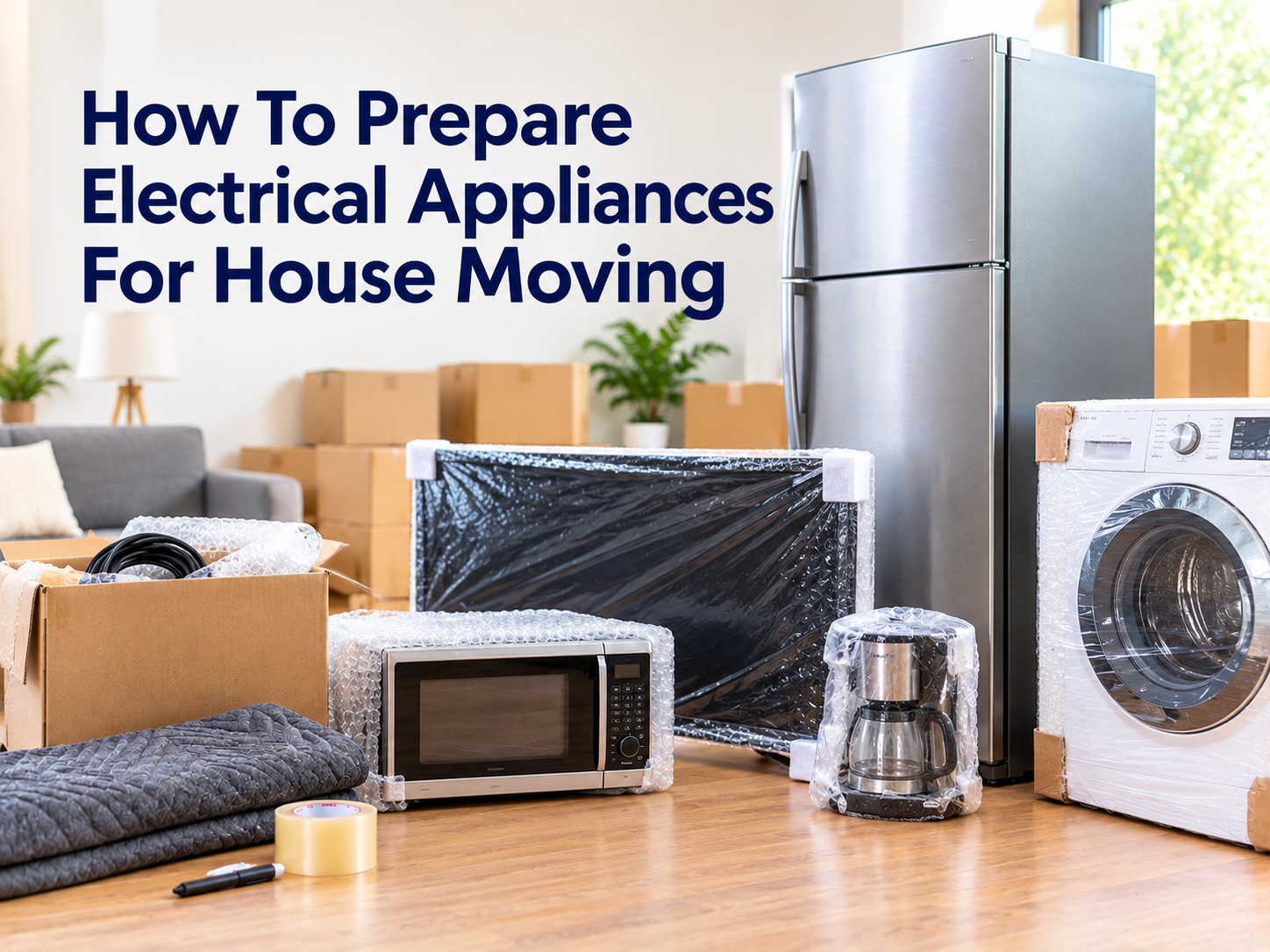
How to Prepare Electrical Appliances for House Moving
Relocating to a new home is an exciting milestone, but the process of packing and moving your belongings can be daunting. Among the most challenging items to move are electrical appliances. From refrigerators and washing machines to televisions and microwaves, these items are not only heavy and bulky but also fragile and sensitive to movement. Proper preparation is key to ensuring they arrive at your new home safely and function correctly once plugged back in.
In this comprehensive guide, we’ll walk you through the essential steps to prepare your electrical appliances for house moving. By following these practical tips, you can protect your valuable electronics and enjoy a smooth, stress-free relocation.
1. Read the Manufacturer’s Manual
Before you start unplugging and moving any appliance, it’s crucial to consult the manufacturer’s manual. The manual contains specific instructions for preparing, moving, and installing the appliance safely. If you’ve misplaced the physical copy, you can usually find a digital version on the manufacturer’s website by searching for your appliance’s model number.
2. Clean and Defrost Your Refrigerator
Your refrigerator requires special attention before moving day. Here’s a step-by-step process:
- Empty it out: Remove all food, condiments, and loose items from the fridge and freezer compartments. Consume or donate perishables leading up to the move.
- Unplug and defrost: Unplug the refrigerator at least 24 to 48 hours before the move. Leave the doors open to allow the freezer to defrost completely. Place towels around the base to soak up any melting water.
- Clean thoroughly: Wipe down all interior surfaces with a mixture of baking soda and water to remove odors and prevent mold growth during transit. Dry the interior completely.
- Secure loose parts: Remove all shelves, drawers, and removable components. Wash and dry them separately, then pack them securely in a padded box. If you prefer to leave them inside, tape them securely in place to prevent shifting.
- Secure the doors: Use strong tape or bungee cords to keep the doors shut during transport.
3. Prepare Your Washing Machine
Washing machines are heavy and contain water, making them tricky to move. Follow these steps:
- Clean and dry: Run a cleaning cycle with hot water and a washing machine cleaner or white vinegar to remove any residue. Once finished, leave the door open for 24 hours to let the interior dry completely.
- Disconnect water supply: Turn off the water supply valves. Disconnect the hot and cold water hoses, drain any remaining water into a bucket, and pack the hoses in a labeled bag. Keep the bag inside the washing machine drum or tape it to the exterior.
- Secure the drum: This is a critical step! Consult your manual to find out how to secure the washing machine drum. You’ll likely need to use the transit bolts (shipping bolts) that came with the machine to prevent the suspension system from getting damaged during the move.
4. Pack Your Television Safely
Modern flat-screen televisions are delicate and easily damaged. The best way to move a TV is in its original box with the original styrofoam packing materials. If you don’t have the original box, follow these steps:
- Unplug and organize cables: Unplug the TV and all connected devices. Coil the cables neatly and secure them with zip ties or twist ties. Label the cables so you know where they go when setting up in your new home.
- Remove the stand or wall mount: Detach the TV from its stand or wall mount. Keep all screws and hardware in a labeled ziplock bag and tape it securely to the back of the TV.
- Protect the screen: Cover the screen with a soft blanket or foam wrap. Avoid placing any pressure on the screen itself.
- Use a specialized TV box: Purchase a specialized, heavy-duty TV moving box from a packing supply store. These boxes often come with foam corners to protect the edges of your TV. Carefully slide the TV into the box, ensuring it fits snugly without shifting.
- Keep it upright: Always transport the TV in an upright position. Never lay it flat on its screen or back.
5. Handle Air Conditioners with Care
Moving an air conditioner, whether a window unit or a split AC, requires careful handling.
- Window ACs: Unplug the unit, remove the filter, and clean it. Carefully remove the unit from the window, keeping it upright to prevent the compressor oil from shifting. Pack it in its original box or a sturdy, padded box.
- Split ACs: If you are moving a split AC, it’s highly recommended to hire professional technicians to uninstall it. They will safely trap the refrigerant gas in the outdoor unit before disconnecting the pipes. Moving it yourself can lead to gas leaks and permanent damage.
6. Prepare Smaller Appliances (Microwaves, Toasters, Blenders)
Smaller kitchen appliances are easier to pack but still need protection.
- Clean and dry: Clean all appliances thoroughly and ensure they are completely dry to prevent mold.
- Remove fragile parts: For microwaves, remove the glass turntable and pack it separately with plenty of bubble wrap. For blenders, pack the glass jar and base separately.
- Organize cords: Wrap the cords neatly and secure them. If possible, tape the cord to the back of the appliance to prevent it from dangling.
- Pack in sturdy boxes: Use strong boxes and line the bottom with crumpled packing paper. Place the heaviest appliances at the bottom and lighter ones on top. Fill any empty spaces with packing paper or bubble wrap so the appliances don’t move around.
General Tips for Moving Electrical Appliances
- Take photos before disconnecting: Before you unplug the maze of wires behind your TV or computer, take clear photos of the connections. This will save you a lot of time and frustration when setting everything up in your new home.
- Label everything: Label all boxes containing appliances clearly. Indicate “Fragile” and “This Side Up” to guide the movers. Keep all small parts, screws, and remotes in labeled ziplock bags and tape them to the corresponding appliance.
- Wait before plugging in: Once you arrive at your new home, do not plug in appliances like refrigerators and ACs immediately. They need to stand upright for at least 2-3 hours (sometimes up to 24 hours, depending on the manual) to allow the compressor fluids to settle back into place. Plugging them in too soon can cause permanent damage.
- Consider Professional Help: If you’re overwhelmed by the task of packing and moving heavy appliances, consider hiring professionals. Services like our packing and unpacking service can handle the entire process safely and efficiently. If you want to estimate your moving costs, try our moving cost calculator.
Frequently Asked Questions (FAQs)
Do I need to hire professionals to uninstall my split AC?
Yes, it is highly recommended to hire professional technicians to uninstall a split AC. They have the expertise and tools to safely trap the refrigerant gas in the outdoor unit, preventing harmful leaks and damage to the compressor.
How long should I wait before plugging in my refrigerator after moving?
You should generally wait at least 2 to 3 hours before plugging in your refrigerator. If it was transported on its side (which is not recommended), you might need to wait up to 24 hours. This allows the compressor fluids to settle, preventing damage to the cooling system. Always check your manufacturer’s manual for specific guidelines.
What are transit bolts for a washing machine?
Transit bolts (or shipping bolts) are metal rods inserted into the back of a front-loading washing machine to secure the drum and suspension system during transport. They prevent the heavy drum from bouncing around and causing severe internal damage. They must be removed before using the machine again.
Can I transport my flat-screen TV laying down?
No, you should never transport a flat-screen TV laying flat. The screen is delicate and not designed to support its own weight or withstand bumps in a horizontal position, which can cause the glass to crack or the internal components to break. Always transport TVs upright.
How should I pack small kitchen appliances?
Clean and dry them thoroughly. Remove fragile parts (like microwave turntables or blender jars) and pack them separately in bubble wrap. Secure the power cords, pack the appliances in sturdy boxes lined with packing paper, and fill any gaps so they don’t shift during transport.
 Chat with us on WhatsApp!



 Your information is secured by


 House
 Office
 Car
 Bike


 Thank You!
